First Meeting · · 6 min read
Commercial Clients Want Drawings: Deliver Stringing & PV Layout Drawings in the First Meeting
Schools, hospitals, offices and factories don’t buy on enthusiasm. They buy on documentation.
This article is part of our series How to Close Solar Deals in the First Meeting. It covers one of the most common challenges Indian EPCs face — and how a 3D solar draft, built during the meeting, helps you solve it before you leave.

The challenge
Commercial buyers involve facility managers, engineers and finance teams. Each wants something different: layouts, electrical details, generation and cost.
Without drawings, the meeting ends with a request to “send the technical details”.
Why it happens
- Multiple stakeholders need documents.
- Internal approvals require drawings.
- Technical scrutiny is higher.
- Budgets are formally approved.
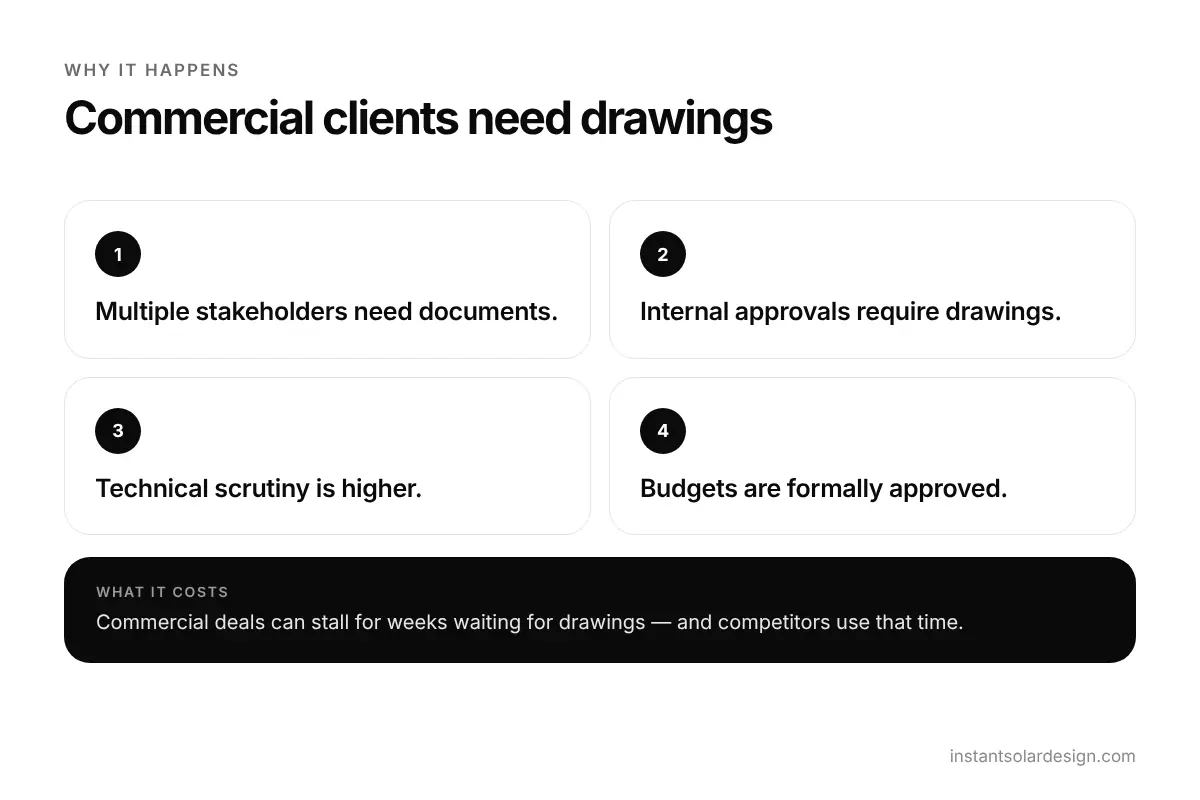
What it costs your EPC
Commercial deals can stall for weeks waiting for drawings — and competitors use that time.
How a 3D solar draft solves it in the first meeting
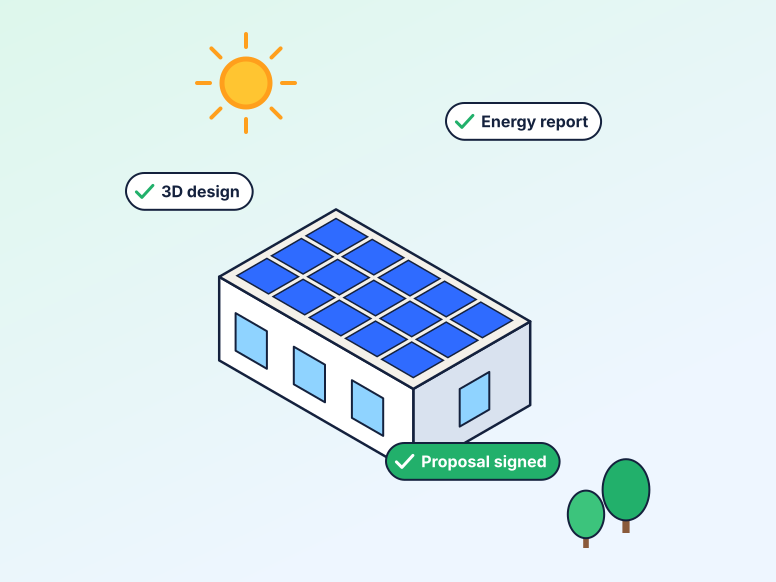
A design tool that outputs stringing drawings, PV layout drawings and an energy report from the same 3D model lets you hand the right document to every stakeholder before the meeting ends.
- Stringing drawings.
- PV layout drawings.
- 3D design report with energy report.
- Proposal builder for formal offers.
If you produce drawings in-house, India-focused tools such as SolarDraft and Solar Designer generate PV array, string-route and single-line drawings straight from the 3D design — exactly what a facility engineer asks for.
First-meeting playbook: 5 steps
- Identify every stakeholder before the meeting.
- Prepare the solar draft in 3D in advance.
- Generate stringing and PV layout drawings.
- Present the energy report to finance.
- Share the 3D link and documents with engineers.
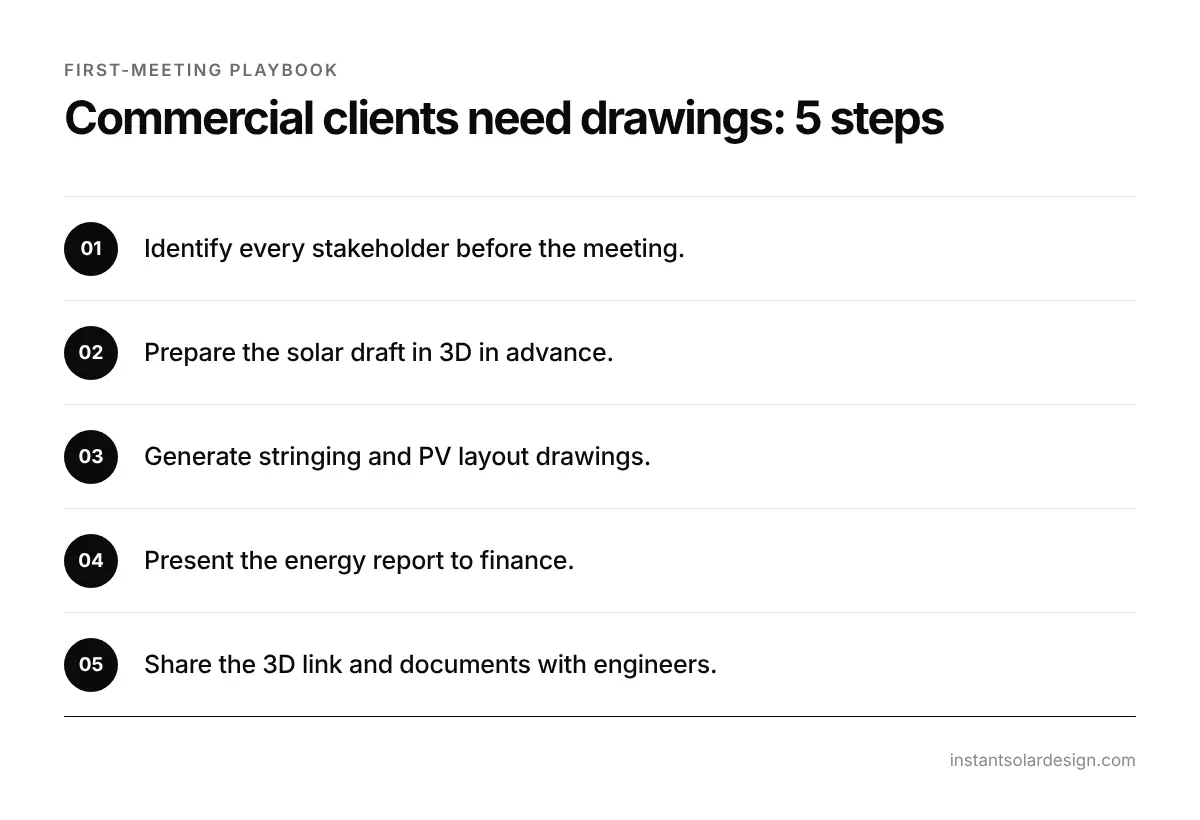
Give each stakeholder the document they care about — drawings for engineers, savings for finance.
Solar draft vs traditional first meeting
| Traditional first meeting | With a 3D solar draft | |
|---|---|---|
| What the customer sees | Brochure & price list | Their own roof in 3D |
| Energy estimate | Rule of thumb | Energy report with losses |
| Proposal | Sent 2–3 days later | Built in the meeting |
| Absent decision makers | Hear it second-hand | Open the 3D link |
| Typical outcome | “Let me think about it” | Decision today |
Related reading
- The complete first-meeting playbook for solar EPCs
- Show Multiple Solar Layout Options Live and Close in the First Meeting
- No Laptop, No Problem: Build a 3D Solar Draft on Your Phone in the First Meeting
- Best Solar Design Software in India (2026): SolarDraft, Solar Designer, Arka360, SolarLadder, Reslink & SurgePV Compared
Need the design done for you?
Send the site — get a 3D design back in 24 hours.
Instant Solar Design delivers white-labelled 3D models, shadow analysis and generation reports from ₹500 per project.
Order a design →Frequently asked questions
Which drawings should a commercial solar proposal include?
At minimum a PV array layout, string routing and a single-line diagram (SLD), plus a generation report. Tools like SolarDraft and Solar Designer produce these directly from the 3D design.
Can rooftop design software handle commercial projects?
Yes. Most India-focused tools support RCC roofs and metal sheds, and higher plans raise the project-size limit — SolarDraft, for example, scales from 500 kW to 10 MW depending on the plan.
Can I share drawings digitally?
Yes, designs are shareable by link.